-Ray Vensel
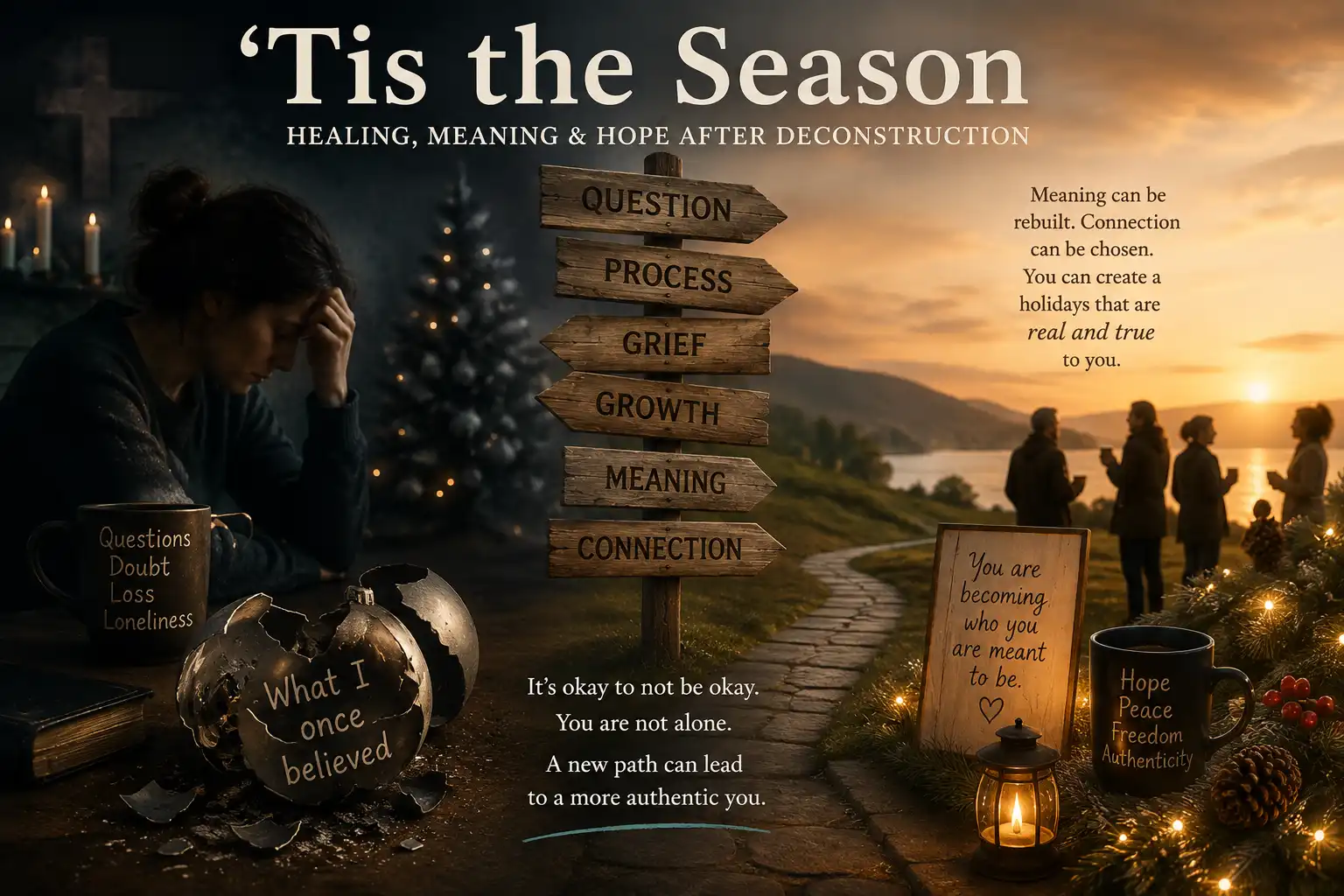
Religious deconstruction is questioning, re-examining, or dismantling long-held beliefs. For some, it’s a world-shaking event. If you have left your faith, the holidays can be sad. You’ve experienced a spiritual crisis and are now separated from associates, friends, and maybe even family. You may feel completely alone in an unfamiliar world.
When beliefs shift, holiday activities that were once spiritually significant, like candlelight services, may now feel painfully disconnected. A sense of certainty that once made the season feel whole is now… gone.
You may feel pressured into rituals that no longer feel authentic. Stepping outside the boundaries of a belief system may lead to feelings of betraying loved ones, and the fear of losing them creates a conflict: stay silent and remain connected, or speak your truth and risk feeling like an outsider at your own family’s table. You deal with comments, arguments, or attempts at reconversion.
Society relentlessly reinforces the idea that the season should feel magical. For people dealing with deconstruction, the disconnect between what you’re “supposed” to feel and what you actually feel can deepen depression.
Post-deconstruction depression shows how deeply your past shaped you. Feeling grief or confusion is a normal response to losing something that was once central to your life, even if leaving it was necessary for your growth.
The path is not linear, especially during the holidays. The meaning once came prepackaged; now it must be rebuilt from scratch. Many people discover that meaning can be rebuilt by embracing connection on their own terms. Whatever shape the holidays take for you, it can be real and grounded in who you are becoming.
Religion often provides answers to life’s biggest questions: Why am I here? What happens after death? When deconstruction makes those answers feel uncertain, depression can follow.
And yet, deconstruction can also lead to growth. This depression says that you are processing changes. Just as grief reflects the importance of what was lost, depression can reflect the magnitude of a person’s transformation.
Many people going through deconstruction judge themselves harshly for feeling depressed or uncertain, but these feelings are a normal response to deep change and can be a first step toward healing. Connecting with others who have experienced similar shifts is a second step. Online and in-person communities for religious deconstruction, interfaith groups, or secular support networks offer support without judgment.
Professional support is out there. Therapists trained in religious trauma and related concerns can help people navigate deconstruction without pushing in any particular direction.
This depression is real and human. It is not a sign of failure or weakness. It’s a natural part of re-evaluation, and shows that something meaningful is shifting.
There are resources available, depending your need. But first, and most important, if the need is so deep and the path so dark that you can’t see a way forward, please call The Maine Crisis Line (The Maine Crisis Line) at 1-888-568-1112 (Voice) or 711 (Maine Relay) or call 988 (which, if you are in Maine, will connect you to the Maine Crisis Line). They provide free and confidential telephone support.
The American Psychological Association (https://www.apa.org/monitor/2025/06/meaningful-life-after-religion) has information for anyone who’s lost their faith and either want to leave it or revive it (there is information for either choice).
Recovering From Religion (https://www.recoveringfromreligion.org) lists many resources.
The Clergy Project (https://clergyproject.org/) is available to any religious professional who no longer believes.
People can emerge from deconstruction with a more grounded sense of self. It is challenging, but liberating.
This season, I hope you find comfort in knowing there’s a community out there that understands. You are not alone. May the holidays bring you the relief of being true to yourself, and connection with people who appreciate you exactly as you are.
And if one person says “Happy Holidays” and the other says “Merry Christmas” in return (or vice versa), I hope that each one considers the possibility that the other is not making a Political Statement. Return the good wishes and enjoy the holidays. There will be time for frank and open conversations later!
Happy Holidays.